News
2026-27 Season
08/09/2026

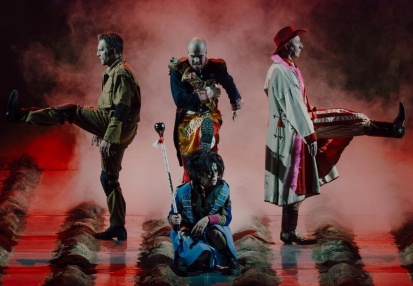
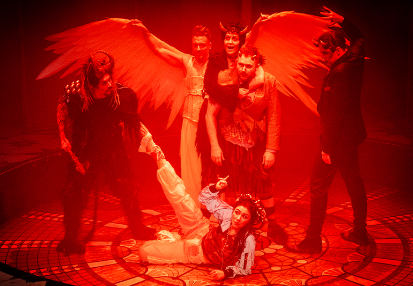
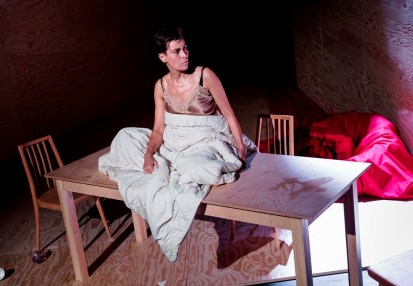
◊ The Oresteia
Written and Directed by Luk Perceval
After Aeschylus's trilogy
Translation of the text (from English): Tadeusz Sławek
Premiere: 10 October 2026, Boguslawski Hall
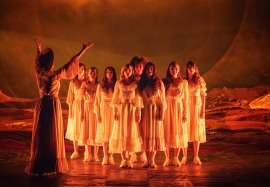
What traces does a war leave once it's officially over? The Oresteia is the story of a return to a home where nothing is the same as it was before. A home where it's difficult to distinguish justice from revenge, and victim from perpetrator.
Luk Perceval, one of the most important artists active in European theatre today, in his first work for the National Theatre, returns to the oldest surviving tragic trilogy - not just to retell an ancient story for the umpteenth time. He is interested in the mechanism that ensures violence fails to cease with the end of a war. On the contrary – it moves into our homes, into memory, language, and the relationships between people. Seen thus in today's reality, The Oresteia is the story of a family that becomes a battlefield. Of a society trying to reestablish order after experiencing chaos. Above all, however, it is about the price that must be paid to stop meeting violence with violence.
What do the echoes of ancient tragedy tell us about our fears, our guilt, our hopes, and our homes? Are we really so far removed from those people who lived in the shadow of that most famous of ancient wars?
Performed with surtitles in English
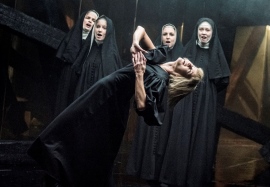
◊ Tennessee Williams
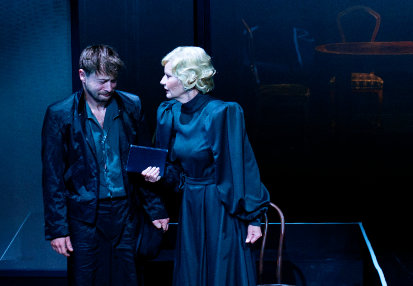
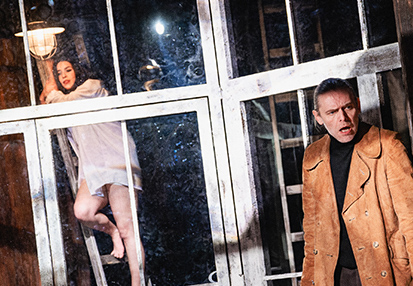
Sweet Bird of Youth
Translator: Jacek Poniedziałek
Stage Adaptor and Director: Małgorzata Bogajewska
Premiere: 14 November 2026, The Jerzy Grzegorzewski Stage at Wierzbowa
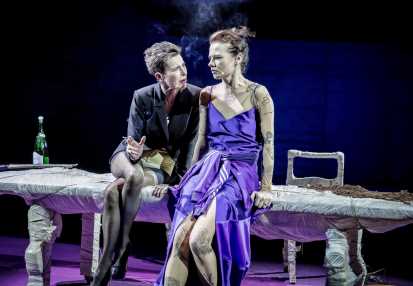
What price would you be willing to pay for fifteen minutes of fame? Is there still room for genuine emotion in the world of show business, or are all relationships there based on cynicism and cold calculation?
Małgorzata Bogajewska returns to the National Theatre with a play by Tennessee Williams—one of the most significant figures in the history of American drama. Sweet Bird of Youth is not merely a story about people blinded by the pursuit of success and status, it is also about dealing with the taste of failure. When one must face up to the demons of the past to fight for one’s future, moral principles often take a back seat. Is it mere chance that this is also a tale about the glamour and the dark side of an actor’s life?
Jacek Poniedziałek has, especially for us, revised his translation on which the adaptation is based.
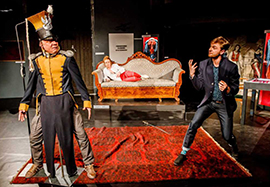
◊ Ray Bradbury
Fahrenheit 451
Director: Jan Klata
Premiere: 17 December 2026, Boguslawski Hall
With great literature comes great responsibility.
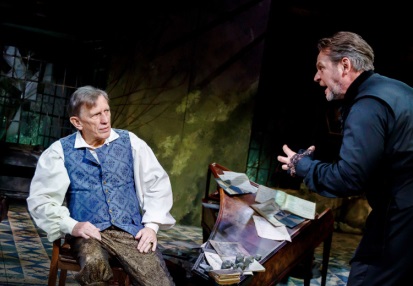
A world where reading books is banned is not merely a totalitarian one; it is, above all, a world where ignorance triumphs over knowledge, and simple entertainment reigns over deeper contemplation. The logic we have come to know is completely inverted, and the role of firefighters shifts from extinguishing blazes to igniting them. Daily life is governed by content seen on screens as well as populist slogans that fuel global conflicts. But how did we get here? And what awaits an individual who, instead of upholding an oppressive law, starts to act against it?
Ray Bradbury remains one of the most important science fiction writers of all time —not only was he a creator of intriguing worlds but, above all, he was a keen observer who accurately diagnosed the challenges posed by civilisation as it progresses.
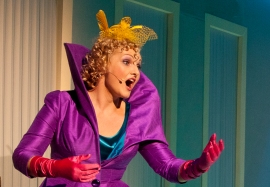
◊ Maria Pawlikowska-Jasnorzewska
Baba-dziwo (A Woman of Wonder)
Director: Aleksandra Bielewicz
Premiere: March 2027, Studio Stage
We are well acquainted with George Orwell’s 1984 and Michel Houellebecq’s Submission, yet it is easy to forget that, just before World War II, Maria Pawlikowska-Jasnorzewska depicted a political regime every bit as brutal as those described by the aforementioned authors — one defined by reproductive coercion and the total absence of women’s rights. The situation in the play is all the more complex given that the state is led by a woman. In an era of increasingly radical conservatism, this story—at once absurd and terrifying—is well worth revisiting.
This production will be helmed by Aleksandra Bielewicz, one of Poland’s most acclaimed young directors, known for boldly tackling texts in which we see ourselves reflected in a distorted mirror.
◊ Stefan Żeromski
Homeless People
Director: Kamil Białaszek
Premiere: June 2027, Boguslawski Hall
Having already tackled legendary texts of American (Infinite Jest) and European (Hamlet) literature, Kamil Białaszek once again turns to the Polish literary canon to ask what shaped the world we inhabit today.
While Positivist novels are currently in vogue in Poland, simply offering the audience another adaptation of Bolesław Prus’s The Doll would set the bar too low. Instead, Mr Białaszek will examine the birth of capitalism in Warsaw, how quickly the gap between social classes widened, and how the system lost sight of the very people who built it. Is the play’s Doctor Judym, nowadays, merely a famous symbol from a school set text, or actually a modern figure forced to constantly fight for his dignity? Homeless People has been staged in Warsaw theatres only once before—over fifty years ago (though it has also been adapted by Polish Radio Theatre). "Make Żeromski Great Again"—that is our mission!